
“If you are researching tiny house prices in canada, you’ve likely encountered a massive price gap between different builders and designs.” Soaring rental costs, high mortgage barriers, and tight housing markets are driving many Canadians to explore alternative, compact living options. However, navigating quotes without understanding what influences the baseline price often leads to unexpected expenses down the road.
As many prospective buyers discover early on:beautiful“Comparing base estimates without detailed itemization is a quick way to blow past your actual budget.”
This detailed breakdown covers the primary factors driving build costs, how micro-living balances against conventional homeownership, and how financing structures impact long-term affordability.
What Determines the Final Cost of a Canadian Tiny House?
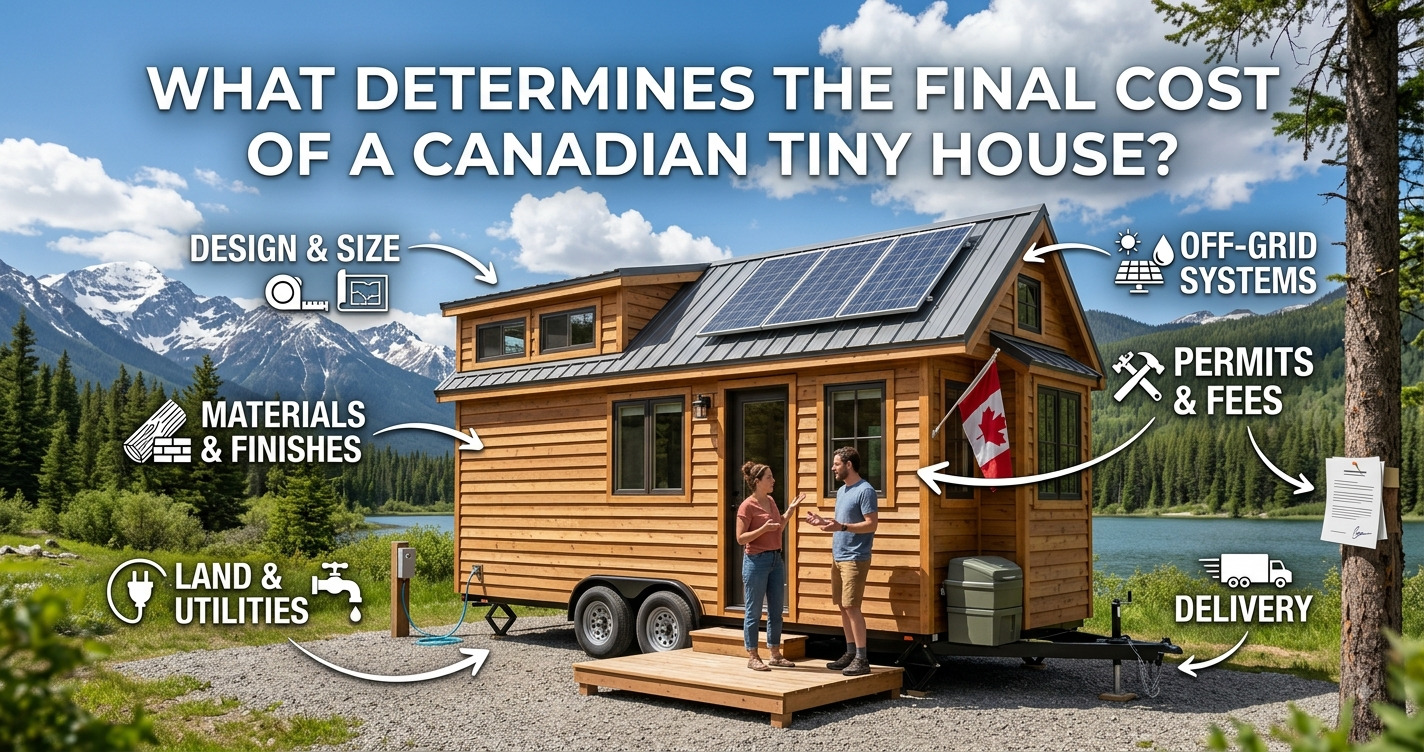
Square footage is only part of the pricing equation. While a simple single-loft floor plan remains budget-friendly, expanding to a multi-bedroom layout with full-sized residential amenities will naturally push costs higher. Material selection is another major variable amazonchoosing standard interior fittings helps keep expenses manageable, whereas custom cabinetry, solid surfaces, and specialty appliances increase the investment significantly.
Off-grid capability also impacts the initial investment. Systems like high-efficiency solar setups, composting toilets, and dedicated battery banks provide complete independence from utility hookups, but they require upfront capital. Additionally, site work—such as land leveling, foundation support, and specialized delivery logistics—must be calculated into the overall outlay.
Partnering with established, experienced builders usually prevents these hidden costs. Clear, itemized contracts provided prior to construction are far more valuable than temporary promotional discounts.
Essential Cost Factors to Review:
- Overall dimensions and structural complexity
- Grade of interior fixtures and major appliances
- Off-grid infrastructure (solar, water management, energy storage)
- Land preparation, foundation work, and transport fees
- Wheel-mounted chassis vs. stationary modular construction
Comparing Micro-Living Costs to Standard Real Estate
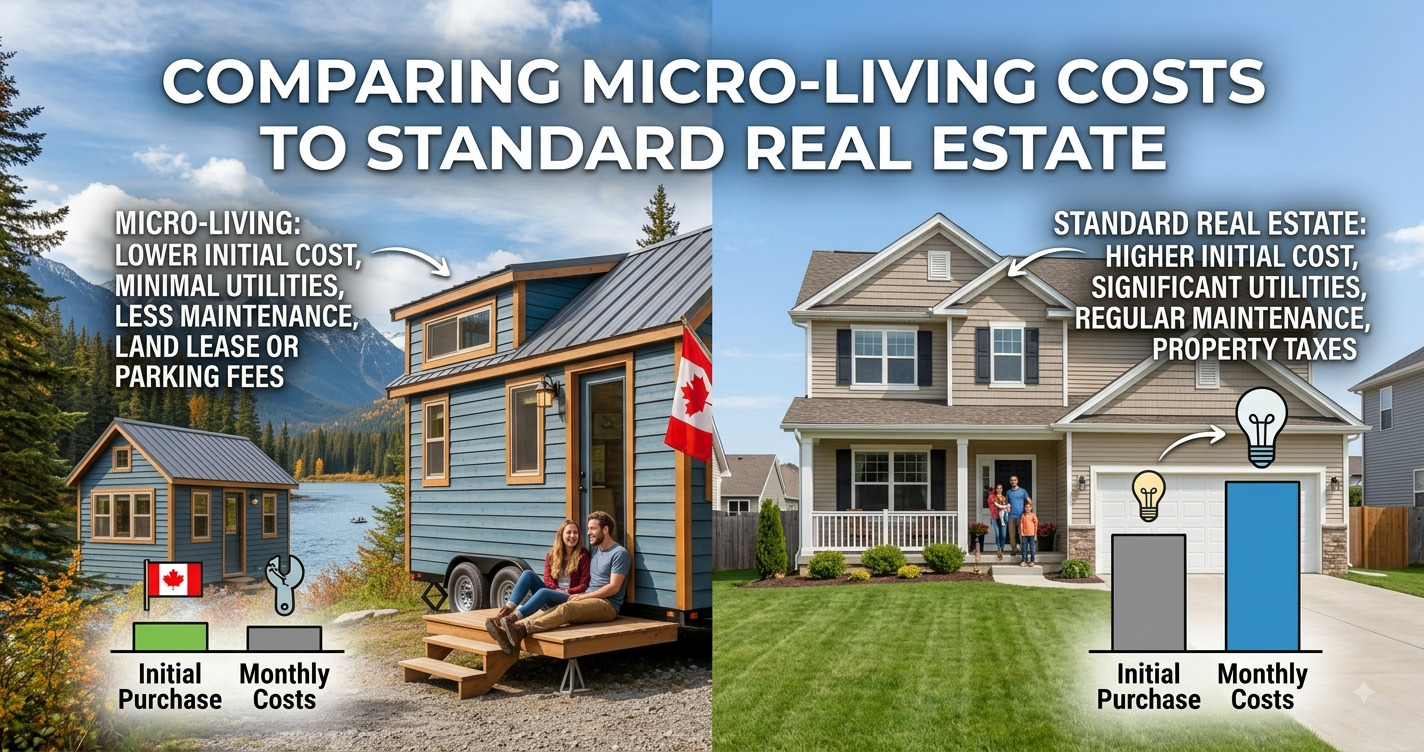
Building a traditional home typically involves long timelines, multiple trade contractors, and extensive local permitting on-site. By contrast, certified chassis or modular tiny homes are constructed indoors within controlled manufacturing facilities, leading to much faster production cycles and fewer weather-related delays.
Long-term operating expenses are similarly reduced. A smaller interior requires considerably less energy to heat and cool during Canadian winters and summers. wikipediaFurthermore, routine maintenance is simpler and far more cost-effective due to the compact footprint.
While micro-living isn’t automatically the cheapest option for every single scenario, it offers home buyers a far more predictable and controlled path to property ownership compared to conventional housing markets.
Financing Solutions for Canadian Tiny Houses
The way a build is financed plays a major role in its lifetime cost. Historically, small footprint homes were funded via personal loans or short-term RV financing, which carried higher interest rates. Today, as builder standards and regulatory certifications have advanced, financing options have expanded significantly.
Homes built in compliance with recognized Canadian modular building codes (such as CSA standards) frequently qualify for structured long-term financing that closely resembles traditional mortgages. This shift allows buyers to secure competitive interest rates and low monthly payments.
When evaluating your purchase budget, review loan structures side-by-side—paying close attention to down payment percentages, interest terms, and amortization periods rather than focusing solely on the sticker price.
Choosing a Certified and Reliable Builder
Pricing transparency varies widely across the industry. Some manufacturers advertise bare-bones base prices that exclude freight, utility hookups, or site prep, while others offer all-inclusive turn-key pricing.
Industry certification should always be a priority. Builders holding independent third-party certifications (such as CSA in Canada or RVIA in the U.S.) adhere to strict structural, electrical, and safety standards. Choosing a certified builder protects your safety, ensures financing eligibility, and preserves long-term resale value.
Working with an experienced manufacturer who has a solid track record helps avoid unnecessary project delays and budget overruns. Proven experience in production directly translates to a smoother, more transparent buying journey.
Summary
Understanding tiny house prices in Canada comes down to evaluating materials, off-grid capacity, site logistics, financing arrangements, and builder credentials. Buyers who secure detailed upfront estimates, understand certified modular financing, and choose reputable builders are best positioned to achieve an affordable, hassle-free build.
Approach your planning with these core criteria, and you can comfortably build a budget that matches your long-term goals.
(FAQs)
What is the average cost of a tiny home in Canada?
On average, turn-key tiny homes in Canada range between $80,000 and $180,000+ CAD. Entry-level shells or smaller DIY models can start lower (around $40,000–$60,000 CAD), while fully customized, off-grid models can exceed $200,000 CAD.
Can you get a standard mortgage for a tiny home in Canada?
Yes, provided the home is built to recognized modular building codes (such as CSA certification). Certified builds increasingly qualify for mortgage-style financing rather than short-term personal loans.
Are ongoing maintenance costs lower for tiny homes?
In most cases, yes. Smaller square footage significantly lowers monthly heating and cooling bills, property assessment values, and long-term repair costs.
Which builder certifications are most important in Canada?
Look for CSA (Canadian Standards Association) certification or RVIA certification. These prove that the unit meets strict national safety, electrical, and structural codes.
Do off-grid setups add a lot to the total price?
Yes. Solar arrays, battery storage, and specialized waste systems increase initial build costs, though they eliminate ongoing municipal utility bills over time.